Starting with small containers up to bulk packaging
Back to the product overview Propylene glycol
Propylene glycol
& glycerin
ISO 9001 & HACCP certified direct manufacturer in Roßtal, Bavaria. Propylene glycol (PG) and glycerin (VG) for e-liquid, cosmetics, food and pharma - food grade, USP and Ph.Eur grade - from 100 ml to IBC - since 2010.
ISO 9001 & HACCP USP / Ph.Eur Grade 100 ml to IBC Direct manufacturer Roßtal
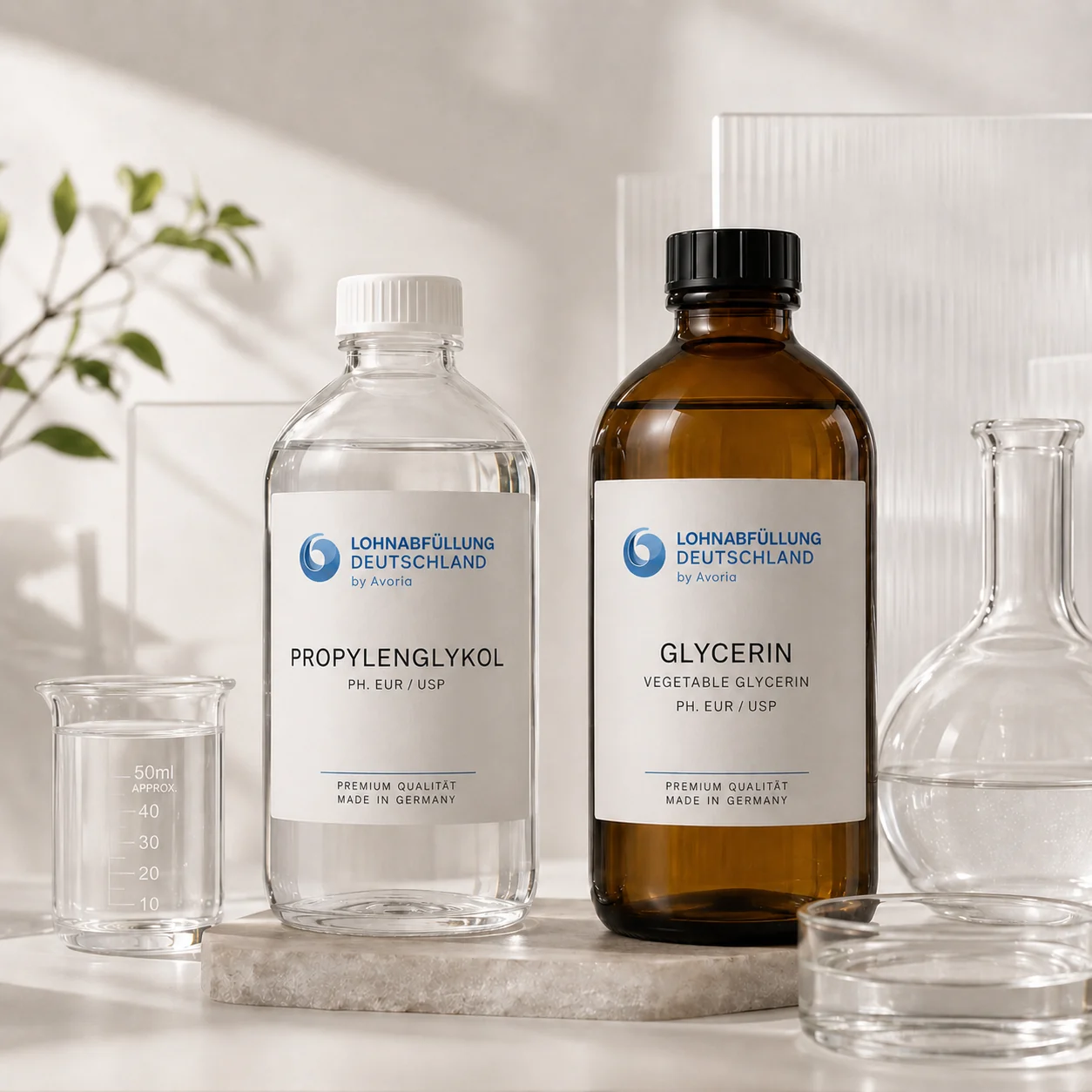
Product area
Propylene glycol & glycerin
100 ml to IBC
PG / VG bases
Documented batches
PG
VG
Base
Scalable for industrial and commercial quantities
Raw materials, mixtures and bases for various applications
Batch-related documents and clear specification comparison
Service profile
Raw materials, bases and containers
cleanly brought together
The new product page positions PG and VG as a separate area: less hidden in the chemicals environment, clearer for customers who are specifically looking for propylene glycol, glycerin and matching containers.
Propylene glycol and glycerin
Filling of PG, VG and matched bases for e-liquids, technical fluids as well as cosmetics-related and hygiene-related applications.
Flexible container sizes
From smaller bottles and canisters to larger industrial containers and IBC solutions according to project requirements.
Brand or B2B kitting
Labeling, packaging and preparation for retail, shipping or commercial further processing.
Quality-oriented sourcing
Raw materials are released in a structured way, documented and processed to suit the planned application.
Specifications
Technical parameters &
container logic
The most important project parameters are visible at a glance: substance, container, application and filling target.
Production in detail
Product types Propylene glycol, glycerin, PG/VG bases and customer-specific mixtures
Applications E-liquid bases, technical fluids, cosmetics, hygiene and industrial processing
Containers Bottles, canisters, cartons, bulk containers and IBC according to project requirements
Quantities From 100 ml to IBC, larger quantities possible on a project basis
Documentation Specification comparison, batch records, label and container release
Target vision Professional raw material and base kitting for B2B and brand-ready lines
Small bottles Canisters & IBC PG/VG bases
Quick answer
Avoria GmbH fills and packages propylene glycol (PG) and glycerin (VG) at the production site in Roßtal, Bavaria - in containers from 100 ml bottles to 1,000 liter IBCs. ISO 9001 and HACCP certified. Food grade, USP grade and Ph.Eur grade available for e-liquid, cosmetics, food, pharma and industrial applications.
Note: this offering is aimed exclusively at commercial clients. Avoria GmbH does not provide legal or regulatory advice.
- ISO 9001 & HACCP certified PG/VG contract filling - GC-MS identity testing per raw material batch as standard
- Container sizes from 100 ml to 1,000-liter IBC - scalable for retail, B2B and industrial quantities
- Purity grades: food quality (E1520/E422), USP/Ph.Eur, DAB - CoA for every batch
5 application areas for PG & VG
Where is PG & VG
filled by Avoria GmbH?
Five application areas for propylene glycol and glycerin in contract filling - with purity-grade-specific documentation, CoA per batch and REACH conformity confirmation as standard scope of delivery.
E-liquid and tobacco heaters
PG and VG as base liquids of every e-liquid formulation. TPD 2014/40/EU: batch documentation for the notification to the EU Common Entry Gate (EU-CEG) as a standard procedure. Production since 2010.
Cosmetics
Glycerin as the most widely used humectant in cosmetic formulations (INCI: Glycerin). Propylene glycol as a solubilizer and penetration enhancer (INCI: Propylene Glycol). EU 1223/2009-compliant batch documentation.
Food
Propylene glycol as food additive E1520 (carrier solution for food colors and flavorings). Glycerin as E422 (humectant). HACCP-certified processing and LMIV 1169/2011-compliant labeling.
Pharmaceuticals and medical devices
USP grade and Ph.Eur grade for oral excipients, topical preparations and nasal sprays. CoA documentation for every pharmaceutical filling order as standard.
Industrial applications
Propylene glycol as antifreeze, heat transfer fluid and de-icing agent. Glycerin in lubricants and technical applications. REACH (EC) 1907/2006 conformity confirmation and SDS as standard scope of delivery.
Typical applications
Usable for liquids, cosmetics
and technical fluids
The category makes visible where PG and VG are needed in practice and how Avoria builds a robust filling and packaging setup from this.
E-liquid bases
PG/VG bases and related mixtures for brand-ready or B2B-oriented liquid projects.
Cosmetics & hygiene
Carrier and humectant functions for care, hygiene and technical product lines.
Technology & industry
Filling into suitable containers for technical applications, further processing and commercial ranges.
Process
From raw material fit to the
finished packaging
The process deliberately stays clear: substance, quantity, container and target application are cleanly defined early on.
Clarify requirement
PG, VG, mixing ratio, application, container and target quantity are recorded.
Raw material & specification
Quality, documentation and release parameters are agreed on a project basis.
Filling & labeling
The goods are filled into the agreed container, labeled and prepared for further use.
Kitting & shipping
Cartoning, palletizing, batch documents and logistics are finalized to suit the order.
Quality & safety
Structured processing for
clear raw material projects
PG/VG projects do not need loud staging, but traceable quality, clean containers and clear communication.
Specifications
Raw material and container requirements are cleanly agreed before the series.
Batch logic
Documented processes create traceability for customers and internal releases.
Container fit
The packaging is selected to suit quantity, handling and target application.
PG/VG focus
The new page clearly separates this raw material area from general chemicals inquiries.
FAQ
Frequently asked questions on PG & VG contract filling
The key answers on minimum quantities, purity grades and TPD documentation - quick and direct.
Still have questions?
A short conversation is sometimes faster than any form.
Call now →Minimum quantities depend on the container format and purity grade. For HDPE bottles (100 ml to 2 L): typically 1,000 to 5,000 units. For canisters (5 L to 25 L): 500 to 2,000 units. For drum and IBC filling: from one pallet upwards.
Propylene glycol and glycerin are filled in technical purity grades, food quality (E1520/E422), USP/Ph.Eur quality for pharmaceutical and cosmetic applications as well as DAB purity grade. For e-liquid raw materials under TPD we recommend at least USP/Ph.Eur quality.
Yes. Avoria GmbH blends and fills PG/VG blends in customer-specific ratios - from 30/70 to 70/30 and special formulations on request. Blending is carried out gravimetrically with documentation of the mixing ratio. The blend batch record states both individual component CoAs, the mixing ratio and the finished goods weight.
For e-liquid base raw materials under TPD 2014/40/EU, Avoria GmbH supplies: CoA with GC-MS identity confirmation, heavy metal analysis (where required), REACH declaration of conformity and SDS. The submission obligation to national authorities lies with the party placing the product on the market.
Yes. Customer-supplied raw materials are accepted - clients deliver the material with a complete CoA and a current SDS. Avoria GmbH carries out a GC-MS identity test before the start of production, independently of the supplier CoA. Remaining quantities are returned after completion of the order at the customer's request.
Avoria GmbH fills HDPE bottles (100 ml to 2 L), canisters (5 L to 25 L), drums (30 L to 200 L) and IBC containers (1,000 L). Customer-supplied containers can be filled on request. Canisters and drums are supplied with hazardous substance labeling (CLP) as standard, provided the material is classified accordingly.
More categories
All ten Product areas
The product pages are built as one connected system, so you can switch quickly between categories without losing the visual style.
01 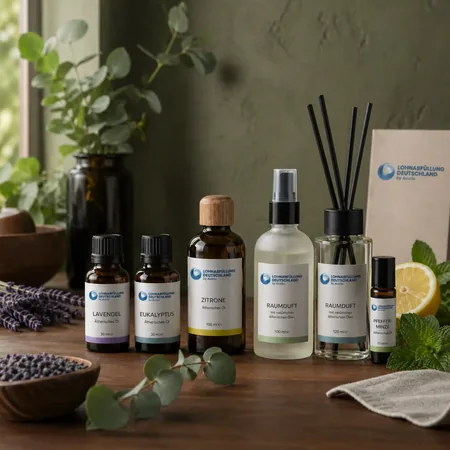
Essential oils
Single oils, fragrance blends and clean blending processes.
02 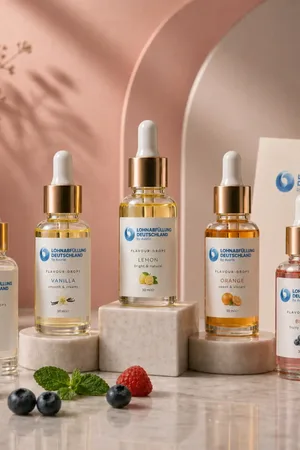
Flavor drops & flavorings
Drop-accurate dosed aroma and flavor systems.
03 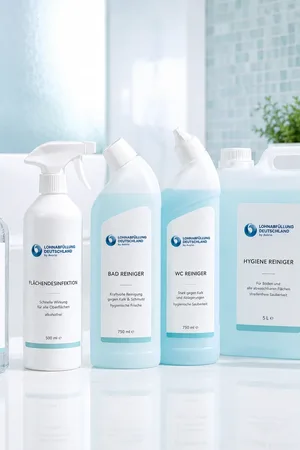
Hygiene
Cleaning, hygiene and clean-care products.
04 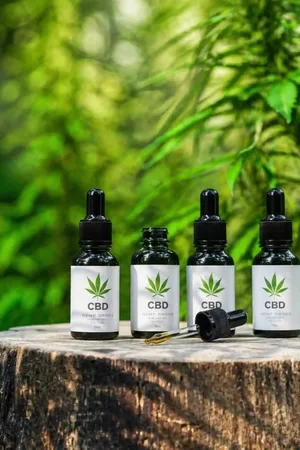
CBD products
Controlled filling for oils, tinctures and topicals.
05 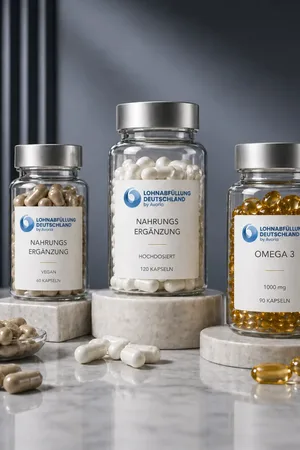
Capsules
Capsule filling and supplement containers.
06 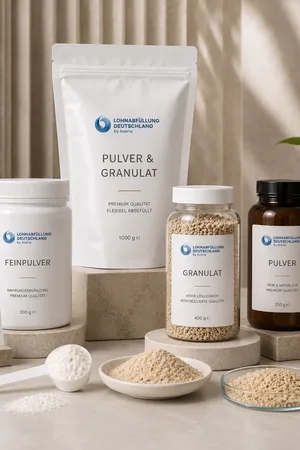
Powders
Powder blends, cans, sachets and stick packs.
07 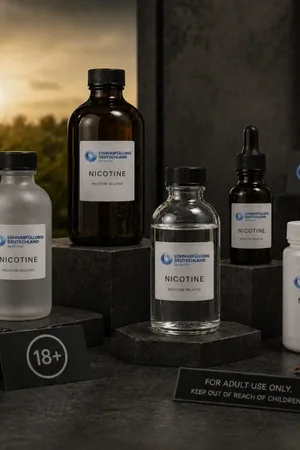
Nicotine
TPD-oriented processes, safe containers and documented batches.
08 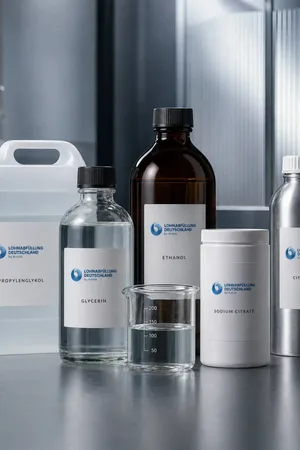
Chemicals
Technical liquids and industrial concentrates.
09 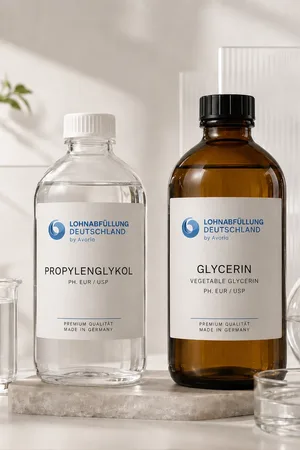
Propylene glycol & glycerin
PG/VG, bases and technical containers.
10 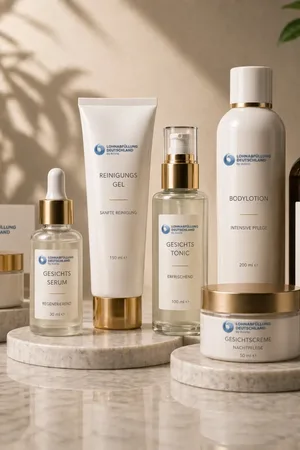
Cosmetics
Care, beauty and brand-ready cosmetic lines.