Quality in contract filling
Quality in contract filling -
documented and traceable
Quality does not begin at filling. Product data, raw materials, packaging, material suitability, labeling, documentation, traceability and clear responsibilities are decisive.
Avoria GmbH assesses quality requirements per project - depending on product and production route, through in-house structures or through suitable partner companies with matching standards.
Quick answer
Quality in contract filling means product, packaging, documentation and process must fit together. Different requirements can apply depending on the product area - for example for cosmetics, food, technical products, oils, powders, sachets or tubes. Before quoting, we assess which evidence, tests and documents the specific project requires.
The essentials at a glance
- Quality requirements are assessed per project - no one-size-fits-all approach
- Product data and packaging must be fully clarified before production starts
- Raw materials and packaging materials are, depending on the project, checked and released
- Batches, best-before dates and traceability are cleanly structured
- Where special requirements exist, suitable partner companies can be brought in
- No blanket commitment without product assessment, specification and feasibility evaluation
QM in practice
What quality management in contract filling means
Quality management in contract filling does not just mean inspecting the finished product at the end. What matters is that the entire process is clearly defined before production starts.
This includes product data, raw material information, packaging materials, fill quantity, labeling, batch, best-before date, packaging, storage and responsibilities. The more precisely these points are clarified in advance, the lower the risk of errors, delays or rework.
We therefore work with a structured preliminary review. Only once the product, packaging and process are sufficiently clear can a reliable quotation and a sensible production route be determined.
Submit project requirementsFour pillars of our quality approach
Project-based assessment
We assess in advance which quality requirements are relevant for your product.
Batches & traceability
Raw materials, packaging materials and finished goods are documented and structured for traceability, depending on the project.
Materials & packaging
Containers, closures, labels and packaging are checked for suitability and expiry.
Standards & partners
Depending on the product, internal processes or suitable partner companies with matching standards are involved.
Documentation
Which documents can be relevant depending on the project
Not every project requires the same documents. Depending on product and industry, different evidence and documents may be required.
Which of these documents are relevant for a specific project is clarified in advance. Where special requirements exist, a suitable partner company can also be brought in.
Standards & requirements
Standards and requirements - assessed per project
Depending on the product area, different standards and requirements can be relevant. We assess them per project, not across the board.
ISO 9001 - documented processes and clear responsibilities
ISO 9001 is a quality management system for documented processes, clear responsibilities and continuous improvement. For clients, what matters is that processes are transparent, documented and auditable.
Whether and to what extent an ISO-certified process is relevant for a specific project is assessed based on the product and its requirements. Annual recertification audits by independent bodies are part of the ongoing QM system.
HACCP - relevant for food and hygiene-sensitive products
HACCP is particularly relevant for food and hygiene-sensitive products. The aim is to identify potential risks in the process, define control points and establish suitable measures to prevent contamination.
Whether HACCP requirements are relevant for a project depends on product type, application, packaging, storage and the intended market. We assess this in advance and communicate transparently which requirements apply to your product.
Analyses and testing - depending on product and requirements
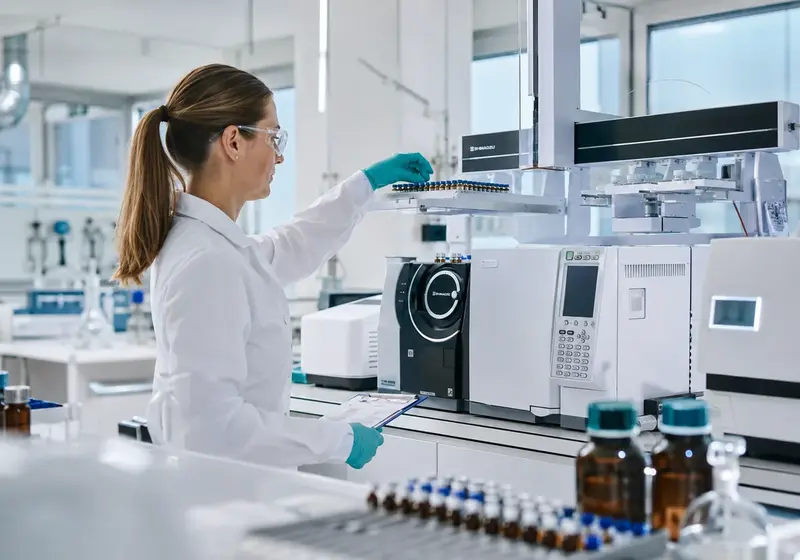
Depending on the product, analytical testing can be useful or necessary. Examples include identity testing, density, odor, color, pH value, viscosity, microbiological testing, raw material testing or specific analyses through suitable laboratories.
For certain product areas, internal or external laboratory testing can be involved. Which tests are required depends on the product, the specification and the desired quality evidence.
We clarify in advance which testing steps are relevant for your project and communicate transparently which analytical route makes sense.
Discuss analysis requirementsPossible test parameters by product
QA process
Quality assurance from incoming goods to handover
Every production step is monitored and documented in a structured way. This creates a solid basis for release, traceability and supplier documentation.
Incoming goods
Raw materials, products and packaging materials are checked for quantity, condition, documents and specification, depending on the project. Material without sufficient documentation or with visible deviations is clarified upfront.
Product & material release
Before production starts, relevant product data, packaging, labels and marking are coordinated. The next step only begins once sufficiently clarified.
Setup & samples
For new products or new packaging, a sample run can make sense to check fill quantity, closure, labeling and packaging in advance. This avoids errors in the production ramp-up.
Production & controls
During filling, fill quantity, closure, labeling, best-before date, batch and packaging are checked depending on the project. Deviations are recorded and clarified, not ignored.
Documentation & handover
After completion, relevant batches, quantities, packaging units and releases are documented. These records form the basis for retailer audits, authority inquiries and traceability. Contract packaging and kitting →
Product areas
Different products, different requirements
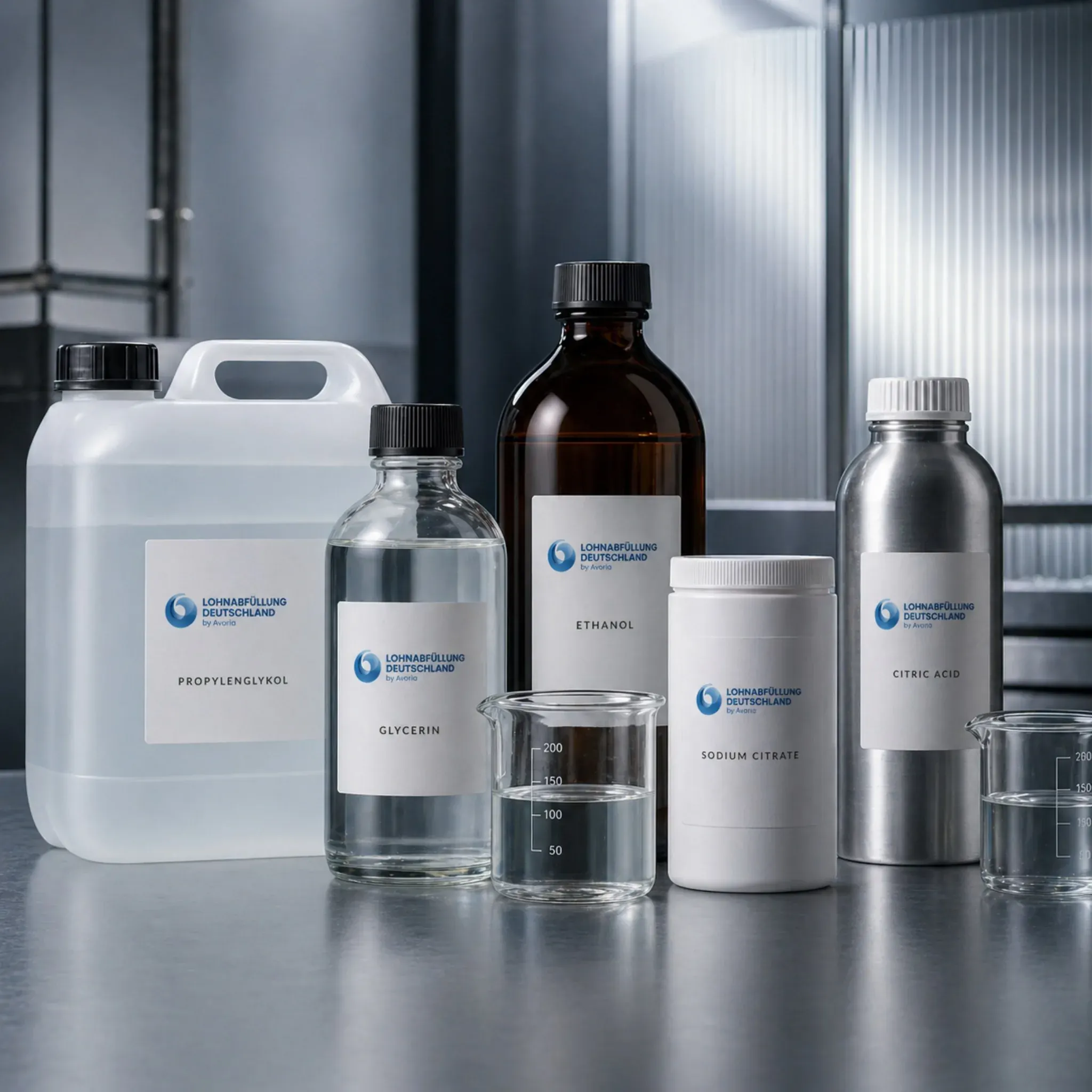
Not every product group has the same requirements. That is why we always assess quality assurance based on the product.


Project structure
Quality through the right project structure
Quality does not come from forcing every project into the same structure. Quality comes from product, packaging, requirements and production route fitting together.
Some projects can be handled through in-house structures. Others require special plant technology, certifications or product environments. In such cases we assess suitable partner companies and coordinate the right route.
HACCP
Every product is classified by quantity, packaging, quality and requirements.
Incoming goods, release, production and handover are documented in a structured way per project.
Depending on the product, we assess in-house execution or suitable partner companies.
If a project does not fit technically or economically, we say so openly.
Minimum quantities
Minimum quantities and project start
The economically sensible minimum quantity depends heavily on product, container, packaging, setup effort and documentation scope.
Small quantities are not fundamentally excluded, but they are often more complex because preparation, setup, testing and documentation are required regardless of the unit count.
For many projects, production from several thousand units or more makes economic sense. For specialty products, small containers or full-service requests, higher quantities may be required. You receive the exact assessment after your first project inquiry.
FAQ
Frequently asked Questions about quality
Frequently asked questions about quality assurance in contract filling – answered quickly and directly.
Sometimes a short call is faster than any form.
Inquire now →The quality management system is certified to ISO 9001:2015 and structured in line with HACCP. The relevance of each certification for a specific project depends on the product, the industry and the requirements, and is assessed in advance.
ISO 9001 describes a quality management system with documented processes, clear responsibilities and continuous improvement. Whether and to what extent ISO-certified processes are relevant for a project is assessed based on the product and its requirements.
HACCP is particularly relevant for food and hygiene-sensitive products. Whether HACCP requirements apply to your project depends on product type, application, packaging, storage and target market. We assess this in advance and communicate transparently.
That depends on the project and the agreed requirements. Possible documents include batch record, incoming goods inspection report, certificates of analysis, release documentation and traceable batch codes. Which records are relevant for your project is defined in advance.
Avoria GmbH works on a project basis. Depending on product, quantity, packaging and requirements, we assess whether execution through in-house structures or through suitable partner companies makes sense. The goal is always the right execution for the specific project.
The economically sensible minimum quantity depends on product, container, packaging, setup effort and documentation scope. Small quantities are not fundamentally excluded, but often more complex. The exact assessment follows your first project inquiry.
Yes. Supplier questionnaires, quality assurance agreements and client-side documentation requirements can be submitted and discussed as part of the project clarification.
You submit product type, fill quantity, target packaging, desired quantity and start date. We assess feasibility and usually respond within two working days with an initial evaluation. No quote without prior product assessment.